
Brand deals do not apply to these wives
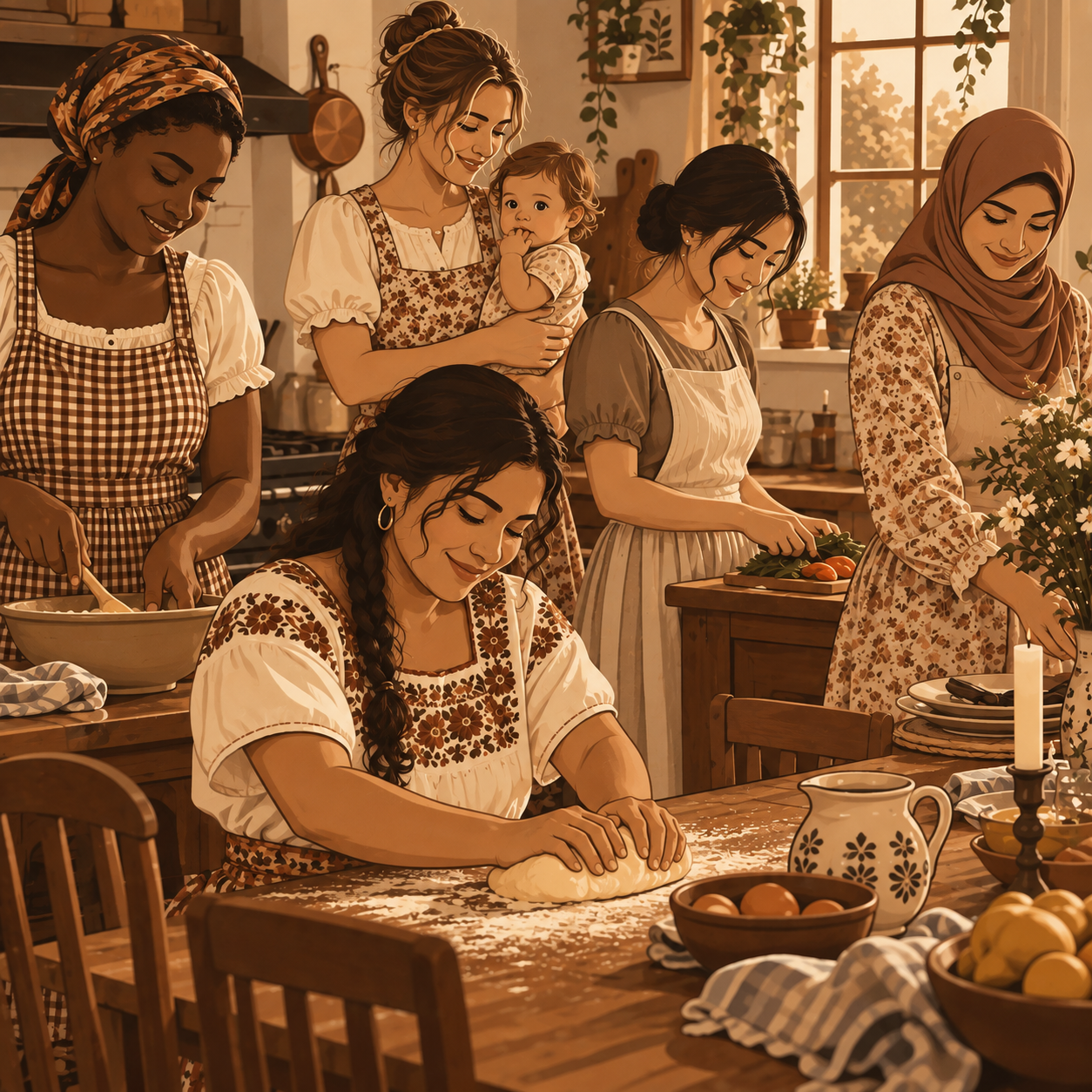
Tradwife culture sells submission as an aesthetic: feathered gowns, homemade bagels, a soft voiceover explaining that dinner took six hours because everything was made from scratch.
For years, this content was treated as a documentary, a window into real gender roles rather than a performance of them.
That performance is flexible in a way domestic life isn’t. Nara Smith, one of tradwife content’s defining faces, built a following on exactly this aesthetic. This summer, she publicly rejected the tradwife label in a podcast appearance that became a flashpoint for the wider conversation, describing herself instead as a working mother who splits parenting duties with her husband.
The reframing landed as a repositioning: years of content built around traditional domesticity, followed by an account that recasts it as something else entirely. Whatever her own life looks like, the moment reveals tradwife culture’s core mechanism: the aesthetic is a costume, worn only as long as it performs.
That flexibility is exactly what real tradwives don’t have. A creator performing domesticity can exit the role once it stops paying. A woman whose marriage and income are structured around that model has nowhere to exit to. It’s her whole economic position, and it stays her position after the trend, and the influencer, have moved on.
In cultures like South Asian ones, homemade food has long been treated as a wifely duty, independent of any internet trend. What tradwife content adds isn’t the expectation itself; it’s a glossier version of it. Making everything from scratch in an expensive gown reframes old domestic labor as aspirational.
The old duty already asked for labor. The new standard adds a wardrobe and an audience, raising what counts as enough without naming the cost of reaching it.
That standard isn’t achievable off-camera. Bread and pasta made entirely from scratch are shot in soft light, narrated as effortless. What audiences see is edited media, not a snapshot of daily life.
Partners, families, and households see only the output, not the production behind it, and start expecting the same from women with none of the resources that made it possible.
Those expectations don’t stay online. They land on women already carrying an old domestic duty, now measured against a new standard layered on top. They absorb the gap between a curated fantasy and their own kitchen as personal failure. It is not a failure. It is marketing.
This is tradwife culture’s real asymmetry: the influencer profits from the aesthetic of submission without living inside its constraints, while the actual tradwife lives inside the constraints and profits from none of the aesthetic, no sponsorship, no exit ramp, no reframing available if the role stops working.
The real tradwife was never the influencer. She’s the woman who believed what was sold, still standing in the kitchen after the trend has moved on.