
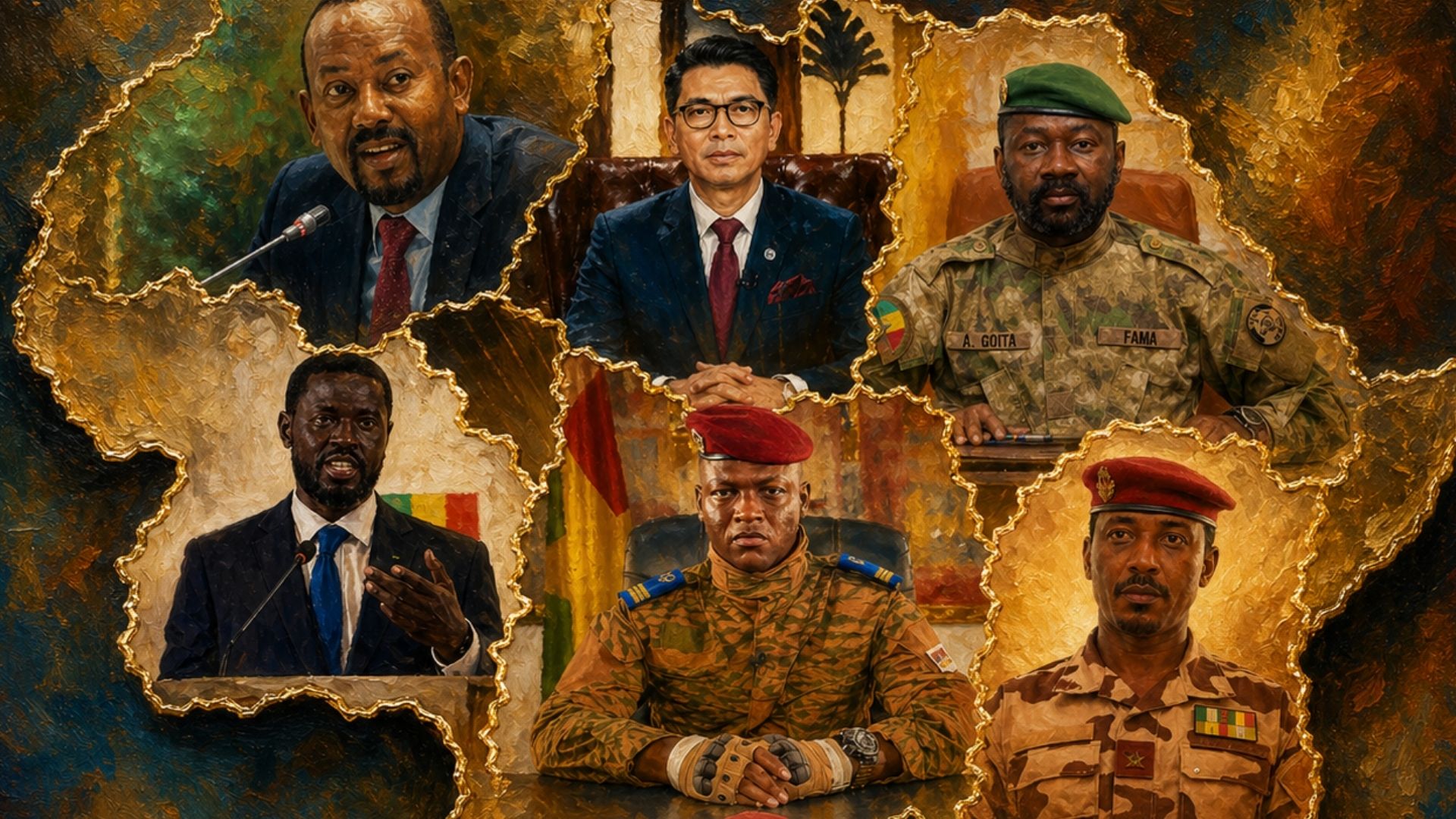
The Old Boys Club must be eradicated
There’s a frustrating pattern across Africa: we replace the old guard with a new set of leaders who, in truth, often carry the same tired ideas. The faces change, but the system barely shifts. And while there are signs of movement by some of the young, energetic leaders in Burkina Faso and Sénégal, which appear perhaps even like the beginnings of something new, it’s more of a slow spiral than a decisive leap forward.
Take countries like Senegal, where younger leadership is beginning to emerge. That, at least, offers a glimmer of hope. There is a growing sense that a “new Africa” might be forming; one that is more assertive, more self-aware, and less willing to accept the status quo. But hope alone isn’t enough. The real problem is this: too many of these changes are political rather than economic.
A truly strategic nation understands that political power without economic control is little more than theatre. You can hold office, make speeches, and dominate headlines, but if your economy is still controlled from abroad, your sovereignty is limited at best.
Look at South Africa. It’s often cited as a success story of political transition. And yes, the end of apartheid was a monumental achievement. Power largely remained in the hands of entrenched interests, many of them tied to historic colonial structures. Decades later, that imbalance still shapes the country, with politics dominated by colonial structures and the economy given to the natives.
This isn’t unique to South Africa; it’s happening across the continent. African nations may “occupy” political power, but the real economic levers are still pulled elsewhere, often in Western capitals. Resources are extracted, currencies are influenced, and financial systems remain entangled with former colonial powers.
One of the clearest examples of this lingering dependency is the issue of currency. In parts of West Africa, countries have long relied on systems tied to France, including having their currency effectively controlled or even printed abroad. It’s astonishing that in the 21st century, nations that gained independence decades ago still operate under such arrangements.
That’s why recent pushback from some African leaders matters. The argument is simple: enough is enough. If Africa is to move forward, it must take control of its own economic destiny.
But here’s the challenge, no country can do it alone.
Individually, African nations are often too divided, too small in economic weight, and too vulnerable to external pressure. But collectively? That’s a different story entirely. A united economic front could shift global dynamics.
And the timing couldn’t be more critical.
As tensions between Russia and European countries reshape global energy markets, Africa finds itself in a powerful, yet underused, position. The continent is rich in gas, minerals, and untapped potential. Europe is actively searching for alternatives, but Africa has not fully stepped into that opportunity.
For instance, the proposed Nigeria–Europe gas pipeline. Nigeria had a chance to play a central role in supplying energy to Europe, potentially connecting to countries like Spain. It could have been transformative, not just economically, but strategically beneficial for most African countries. A project like that might have laid the foundation for a stronger, more unified African economic bloc.
But internal divisions and competing interests stalled progress. And with that, a major opportunity slipped through Africa’s fingers. That’s the real tragedy, not a lack of resources, not a lack of talent, but a lack of coordinated vision.
If Africa is serious about becoming a global force, it must stop confusing political symbolism with real power. Economic control over resources, currency, and trade is the foundation of true independence.
Until that shift happens, the continent risks repeating the same cycle: new leaders, old systems, and missed opportunities.
The potential is there. The question is whether Africa is ready to act on it.