

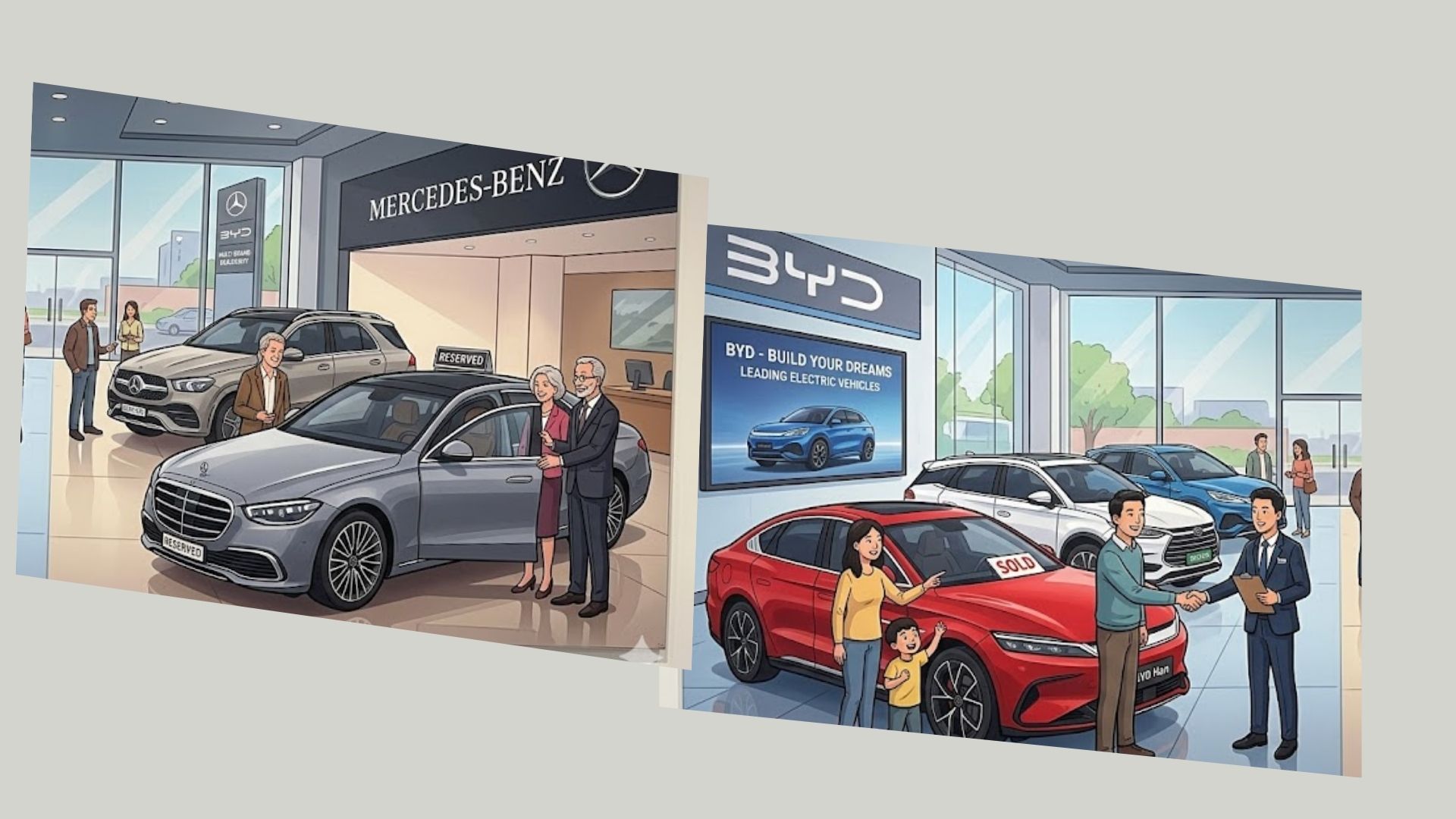
No resale value
Chinese vehicles are becoming recognisable around the globe. Vehicles are starting to have a distinctive make which consumers are not familiar with, and this is why most consumers from the West are starting to buy Chinese vehicles. Ford CEO Jim Farley stated in an interview that he drives the Xiaomi SU7 electric vehicle so that he can understand their competitors. But deep down, Farley likes the Chinese vehicle, and this claim is false about understanding the competitive advantage, because in the interview, his body language was different, as there was a feeling that he was scared of the competition coming from China.
In recent years, Chinese car makers such as Xiaomi and BYD have increased their production in the West and have become the choice for consumers in the West. Although the trade-offs between the Far East and West continue to deepen, it seems that Chinese automobile makers are entering a market where the barriers to entry for new entrants are very high, and it does not feel like they can gain any market share. But it seems to be the opposite, as Chinese automakers are making strides in the market and are now becoming a consumer choice.
The boom of the EV has opened a new path for the Chinese automakers to exploit, as EVs have allowed them to explore the markets and also create innovative electric vehicles which big Western automakers have not created yet. With already 10% of the market in the UK and Europe, Chinese automakers are now showing their Western counterparts that they can make consumer vehicles that include the mechanisms of electrics and interiors, which consumers do not have to pay a lot of money for.
Vehicles such as Jaecoo and Omoda, which are produced by Chery, are taking over in the UK as the consumer choice as these vehicles are a replica of luxury cars such as Range Rover, but the difference is that consumers are paying a fraction of the price. However, the question that remains for consumers is the resale value of these cars due to their brand recognition and also customer loyalty.
In the Western markets, vehicles have always remained the pride and joy; people usually treat their vehicles as their first partner. People purchase vehicles based on their brand recognition and loyalty because their friends and families have purchased a vehicle, so they intend to stick with that vehicle for a long time. Although BYD and Chery brands of vehicles look good for now, they have exterior and interior design which screams ‘nice’, and some consumers might buy them because of the initial appeal. But reselling this vehicle will be hard for consumers because they do not have the same brand equity as the Western automakers.
Chinese vehicles are the new shiny toys, and toys get old or boring at some point in time, and consumers will always opt for European, Japanese and American vehicle models when they want to purchase a second-hand vehicle. Regardless of how Chinese automakers are entering the Western markets and gaining market share at a rapid rate, consumers who know about vehicles will always stay loyal to the Volkswagen Group, Ford, Tesla, Land Rover, Mercedes-Benz, Toyota and other established car brands because they know that the resale value is far greater than reselling a Chinese car brand.