
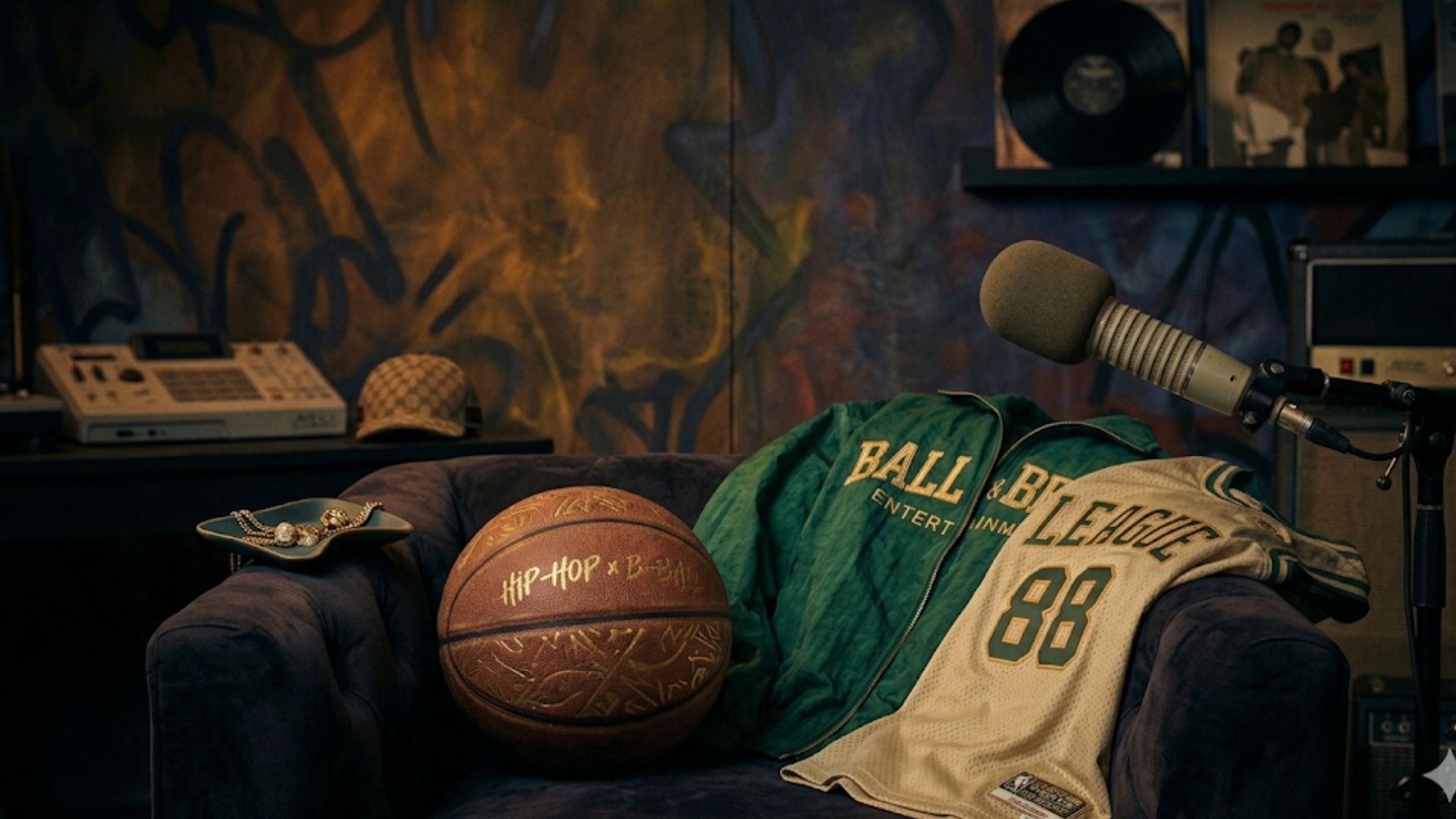
A marriage for life
Whenever basketball is played, there is almost always the presence of hip-hop music alongside it. Over the years, basketball has evolved tremendously, from its early, more rigid style of play to the modern, fast-paced era shaped by legendary athletes such as Wilt Chamberlain, whose records still stand today and may never be broken. As basketball grew in popularity, it needed a cultural partner to help transform it into a global phenomenon, and that is where hip-hop entered the picture.
At the same time, hip-hop also needed to expand beyond its roots in street culture, even though many elements of that culture still remain central to the genre today. Hip-hop needed a commercial platform that could elevate its visibility and global influence. Basketball provided that opportunity. In return, hip-hop gave basketball a cultural edge and “cool” appeal that helped the sport connect with wider audiences around the world.
During the 1950s and early decades of the NBA, basketball was largely viewed as a sport dominated by white American college athletes. The style of play at the time was often considered slower and less expressive compared to the modern game. As more Black American players entered the sport, they introduced creativity, flair, athleticism, and a more exciting style of dribbling and shooting that transformed basketball’s appeal. The evolution of street basketball culture helped shape the modern identity of the sport, bringing a new energy and swagger that resonated with broader communities.
The NBA needed that street appeal to market itself globally, and hip-hop culture became the perfect companion. Hip-hop music and basketball naturally complemented one another because both emerged as powerful forms of Black cultural expression in America. Black athletes and artists added dimensions to the sport and entertainment world that reshaped popular culture entirely. In many ways, basketball also became one of the spaces where racial barriers slowly began to break down, as Black and white athletes competed and succeeded together on the same teams.
Fashion also played a major role in strengthening the relationship between basketball and hip-hop. Trends associated with hip-hop culture, such as oversized clothing, baggy jeans, chains, and designer trainers, became deeply integrated into basketball culture, particularly within the NBA. Signature sneakers evolved from sportswear into global fashion statements, with basketball players becoming style icons in the same way rappers were.
Music became an easy and natural addition to the basketball experience. Playing hip-hop during warm-ups, halftime shows, timeouts, and throughout games helped create the atmosphere and entertainment value that modern basketball is known for today. The relationship between basketball and hip-hop now feels inseparable, with each culture continuously influencing the other.
Overall, basketball and hip-hop have become one of the strongest cultural partnerships in modern entertainment. Both have elevated one another on a global scale, and it is difficult to imagine basketball reaching its current cultural status without the influence of hip-hop music and culture.