
It will be difficult to implement
It is a good thing to consider the use of AI for political resistance and economic integration. But its application is not simplistic, particularly in the case of economic integration as a continent. AI may be useful for political resistance, such as fighting corruption within individual African countries or even at the continental stage, and probably to fight external aggression or intervention. It can also be useful for individual African nations’ economic development. However, Africa’s problems are not based on an individual basis; individual countries may strive as much as they can, but it is collective economic resistance from the Western and Eastern economic blocs’ deliberate effort to prevent Africa from becoming an economic giant.
AI is a wonderful tool, but the mindsets of African leaders will stop AI from becoming the tool for economic liberation as a continent. AI as a tool for economic liberation requires an understanding of coming together to stand strong, having the same market, same economic voice, and ultimately integrating economically as a continent. In Africa, the real fight is continental integration and economic liberation. Using South Africa as an example, as the black people in South Africa understand that political power is nothing without economic power, the black-led political leaders have consistently denied that reality. The black resistants are using artificial intelligence to educate their people to understand where the real power lies.
It is not realistic that Africa can adopt AI fully as a continent because of the individual national political instability and or underdevelopment. Individual African leaders are not yet ready to surrender their respective national sovereignty to any form of continental supremacy to guide African economic policy direction, as in the case of the European Union. The reason for this is not far-fetched. Every leader benefits from their country’s policies directly.
Again, if African leaders are not the drivers of AI due to a lack of the required infrastructure to drive AI, and those that originated AI are not minded for Africans to use it for corruption purposes only, how can Africa steer the use of AI to develop the continent’s economy?
Till tomorrow, I still believe that individual African nations can only achieve so much on their own, but any attempt to force continental economic liberation would be forcefully resisted by countries whose survival is now based on Africa’s economic underdevelopment. On political resistance, for instance, whenever any African nation decides to go the way of China to stop corruption in leadership, they will interfere and raise such concerns as a violation of international human rights. Even though we are all Africans collectively, our greatest strength lies in unity. However, achieving a strong collective position often feels almost impossible because of political leadership across many African nations, who are mostly tools used for African economic subjugation.
One of the major problems is that some African political leaders benefit generously from the current state of Africa’s economy and political structure. Consequently, would these same leaders be willing to surrender their respective sovereignty for continental economic integration even if for the greater good of the continent? A united African economic integration sounds ideal in theory, but in practice, it remains extremely difficult.
Take countries like Nigeria as an example. Its leaders are often accused of focusing more on maintaining political power than building long-term economic stability. In many African nations, political office has become associated with personal enrichment and generational wealth accumulation rather than national development. In some cases, leaders remain in power well into old age while still fighting to extend their political influence.
The same criticism is often directed at several African governments, including South Africa, where many people feel that leadership lacks modern ideas for governing in the 21st century. Corruption, poor governance, and weak institutions continue to slow development. Education systems suffer from expensive tuition fees, poor staff welfare, and repeated strikes by lecturers and teachers. Many skilled educators leave because of poor working conditions, creating an educational crisis that affects the next generation.
Without strong educational systems, people struggle to develop the knowledge and critical thinking needed to challenge political failures or compete globally. Education is one of the key foundations required for any nation to become an international player in the modern world. Unfortunately, many African countries are still far behind in building systems that empower citizens in this way.
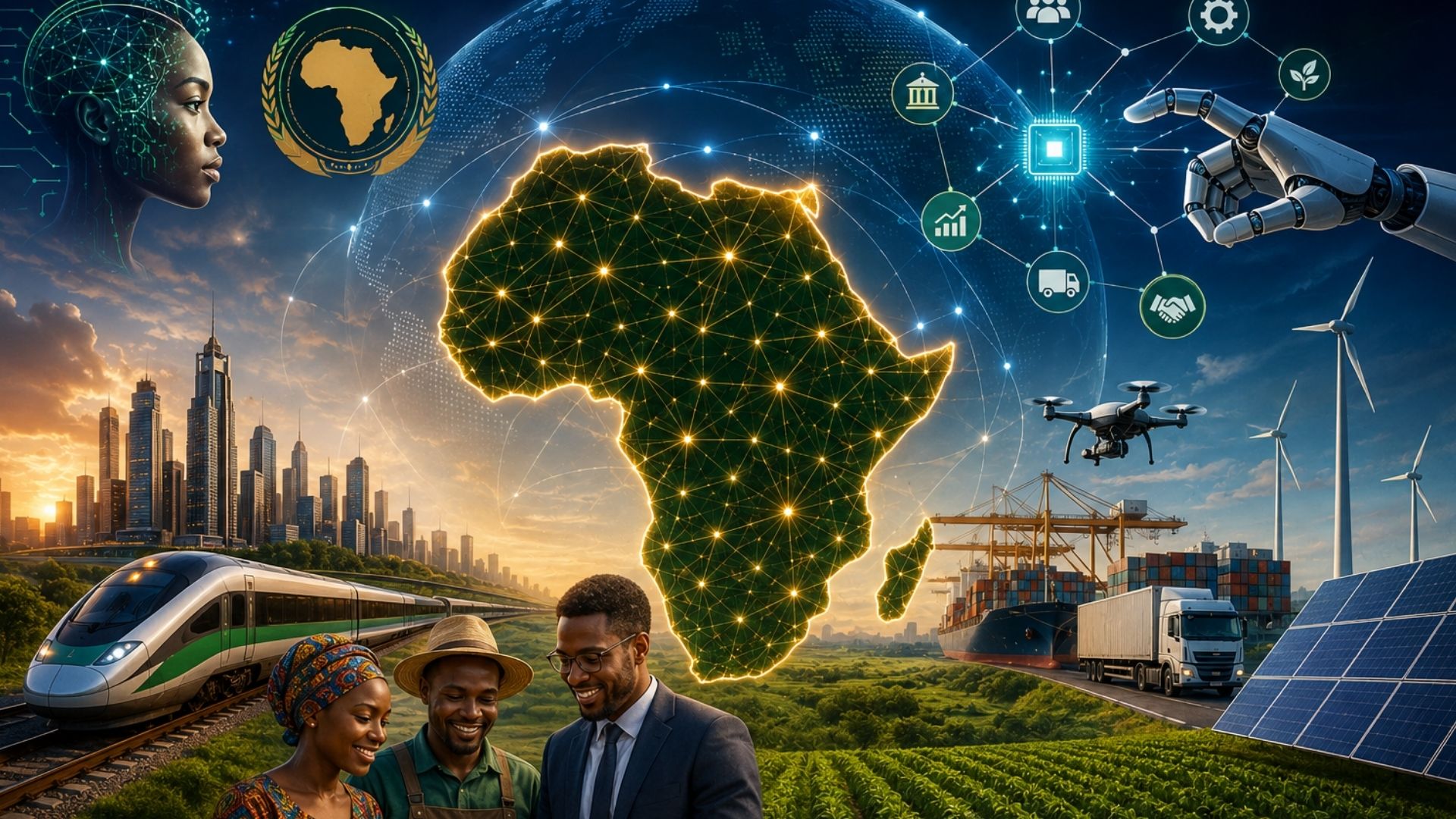
At the same time, the world is advancing rapidly through technology and artificial intelligence. Africa risks being left behind unless the continent invests heavily in innovation, education, and economic development. AI and modern technology could help transform African economies if implemented properly across the continent. However, progress has been slow and inconsistent.
The real issue is power: who is willing to give up personal or political interests to build a stronger African Union for future generations? Until leadership, education, and economic systems improve collectively, the dream of a truly united and economically powerful Africa will remain difficult to achieve when implementing artificial intelligence in the wider economy.